At just 19 years old, Beau Schilling has already made National Walleye Tour history.
The BeatDown Outdoors angler capped off an outstanding 2026 season by winning the Progressive National Walleye Tour Angler of the Year title with 972 points. In doing so, Schilling became the youngest angler in NWT history to earn AOY honors and the first rookie to claim the title.
The season was built on consistency. Schilling finished inside the Top 5 at every regular-season NWT event, placing fourth on Lake Erie, third on Lake Oahe, fifth at Bay de Noc and third on Green Bay. He then finished 18th at the NWT Championship on Lake Sakakawea, which was enough to secure the Angler of the Year crown.
For a 19-year-old rookie competing against some of the best walleye anglers in the country, that kind of consistency says a lot.
A Season Built One Decision at a Time
Schilling opened the season with a fourth-place finish on Lake Erie, weighing 77 pounds over two days. From there, his AOY run only gained momentum.
At Lake Oahe, he found himself in trouble late on Day 2 before connecting with two key walleyes that helped push him into third place. Those fish proved critical in the eventual Angler of the Year race.
He followed that with a fifth-place finish at Bay de Noc before another podium finish on Green Bay. There, Schilling made a long run toward the northern tournament boundary on Day 2 and put together a 44-pound bag that helped him finish third with 84 pounds, 7 ounces.
By the time the NWT Championship arrived, Schilling had built enough of a cushion to control his own destiny.
That’s what made his season so impressive. He never gave the rest of the field the bad tournament they needed to catch him.
Using Electronics to Read the Fish
Modern tournament walleye fishing relies heavily on electronics, but Schilling’s approach goes beyond simply finding fish on a screen.
Forward-facing sonar is part of the way he breaks down water.
While searching, Schilling has discussed running his LiveScope range out around 120 to 130 feet. Once he gets around fish, he can tighten that range and focus more closely on individual walleyes.
That’s where the real work starts.
Forward-facing sonar lets him see how fish respond to a bait. Some fish rise quickly. Others follow without committing. Some simply turn away.
That feedback helps Schilling decide whether to keep working a fish, change his presentation, or move on to another target.
At Lake Oahe, that meant making presentations to numerous individual fish before finding the right bites. On Green Bay, it meant working vertically around suspended walleyes and keeping his presentation where those fish wanted it.
The electronics provide the information. The angler still has to interpret it.
Beau Schilling’s BeatDown Outdoors Bow Setup

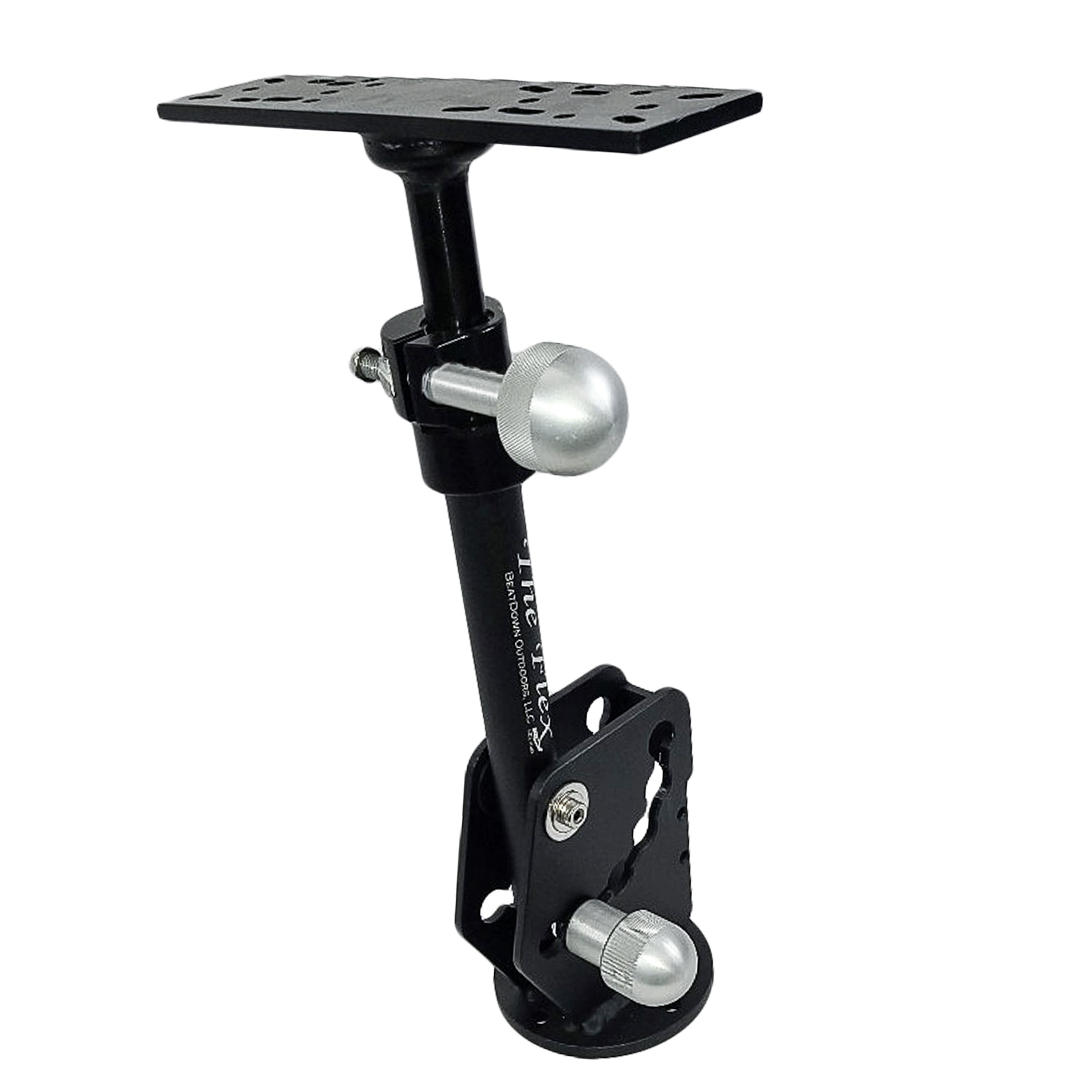
Beau Schilling runs a BD Commander double-stack setup and BeatDown Outdoors Zeroed In Live T-Mount at the bow.
At the front of the boat, Schilling runs a BD Commander in a double-stack configuration along with the BeatDown Outdoors Zeroed In Live T-Mount.
The Commander gives Schilling the ability to position his electronics at a comfortable viewing height and angle while he’s working the trolling motor and watching fish on forward-facing sonar.
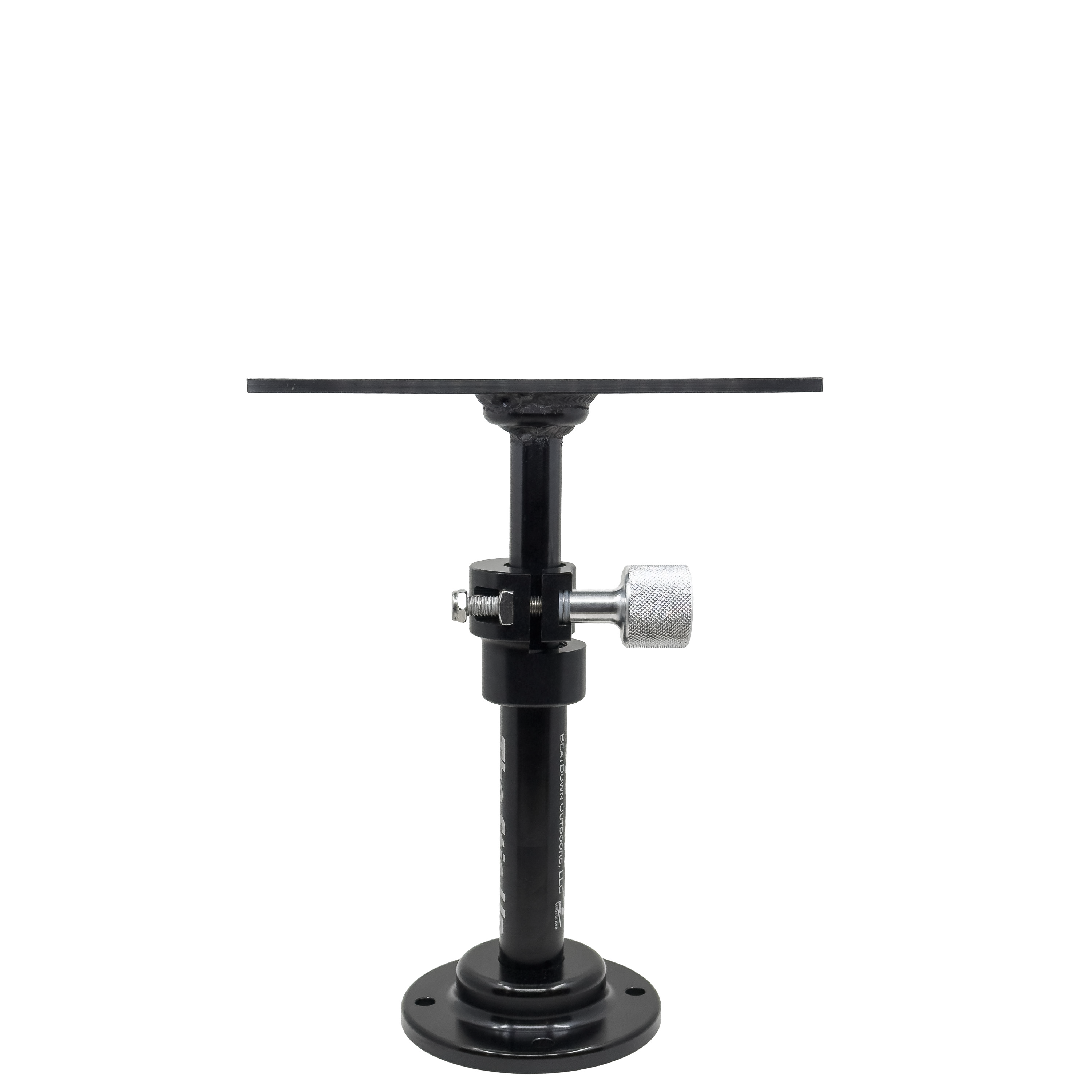
The Zeroed In Live T-Mount handles the other side of the equation by helping him precisely position his Garmin LiveScope transducer. The mount adjusts in 5-degree increments and provides a true zero-degree position, helping an angler understand exactly where the sonar beam is pointed.
For somebody fishing individual walleyes on LiveScope, that kind of repeatability matters.
When Schilling sees a fish on the screen and makes a presentation toward it, having both the display and transducer positioned correctly helps remove some of the guesswork.
A Console Setup Built for the Way He Fishes

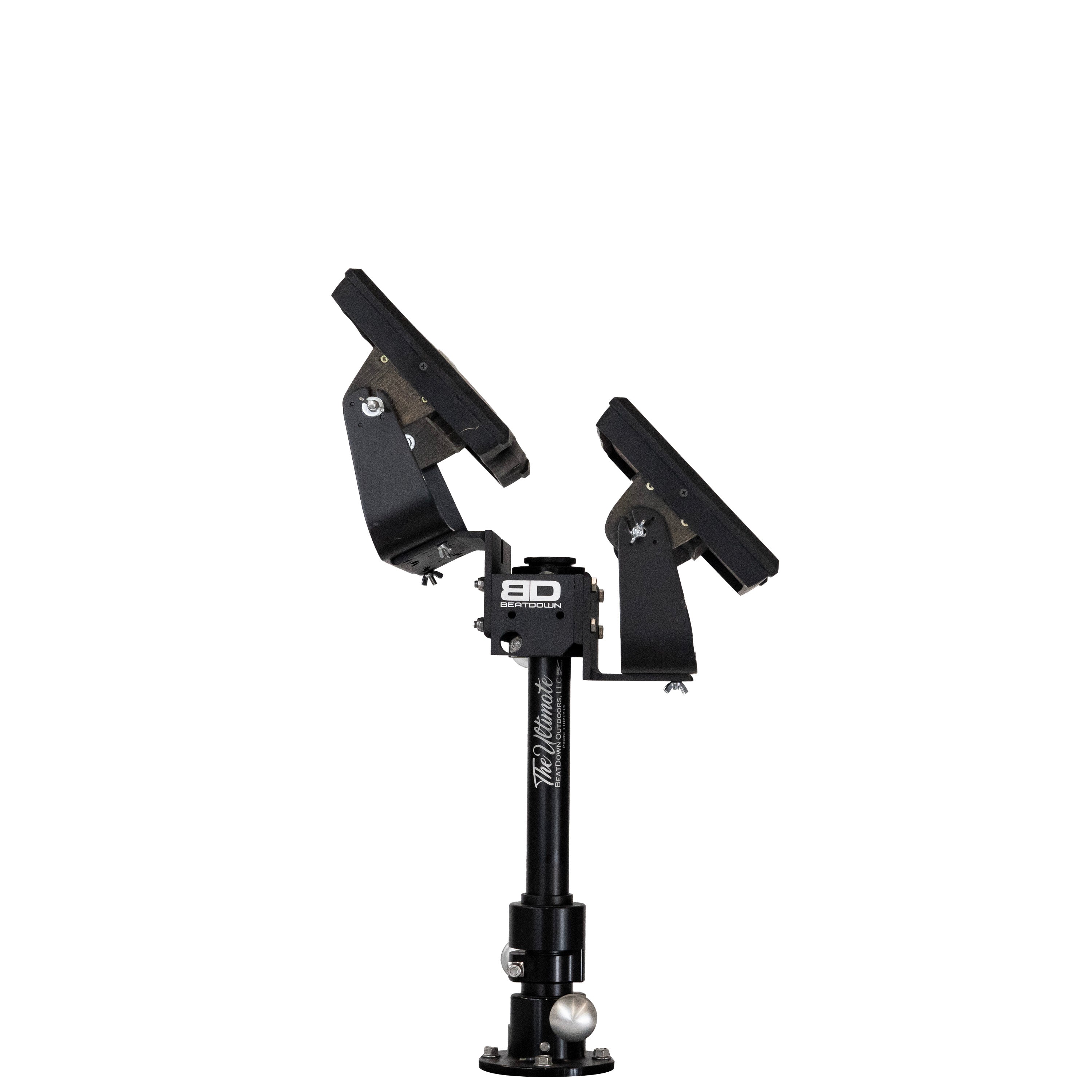
At the console, Schilling uses BeatDown Outdoors’ Ultimate Console Mount.
At the console, Schilling runs the Ultimate Console Mount. The setup lets him adjust the position and viewing angle of his electronics while navigating, searching for fish, or moving between areas.
That adjustability is important because electronics serve a different role at the console than they do at the bow.
Up front, Schilling may be watching one specific fish react to his bait. At the console, he may be studying mapping, following depth changes, looking for bait, or making a long run to another section of the lake.
In both situations, the goal is the same: keep the information he needs in a position where he can see it and use it quickly.
The Angler Still Makes the Call
Electronics played an important role in Schilling’s 2026 season, but technology alone doesn’t win an Angler of the Year title.
At Oahe, he had to stay with it long enough to catch two critical fish late in the day.
On Green Bay, he made a major run with his season on the line and found the quality fish he needed.
At the Championship, he had to adjust when the pattern he expected to fish didn’t develop the way he hoped.
Forward-facing sonar can show an angler where a fish is and how it reacts to a bait. A well-designed mounting system can put the electronics and transducer where the angler wants them.
But somebody still has to decide when to stay, when to leave, and when to change.
Throughout the 2026 National Walleye Tour season, Beau Schilling made enough of those decisions correctly to become the youngest Angler of the Year in tour history.
From everyone at BeatDown Outdoors, congratulations to Beau Schilling, the 2026 National Walleye Tour Angler of the Year.
At 19 years old, this probably won’t be the last time we see his name near the top of the leaderboard.